Proudly serving Phoenix, Mesa, Scottsdale, Tempe, Glendale, Chandler & surrounding areasCall or Text 24/7: 602-449-9593
Aerial view of a Phoenix, AZ suburban neighborhood featuring stucco houses, desert landscaping, and Saguaro cacti.

Garage Door Opener Installation for Belt, Chain, and Jackshaft Systems in Phoenix, AZ

Phoenix Garage Door Repair Co. installs and services garage door openers for homes and businesses across Phoenix, Arizona. We handle chain-drive, belt-drive, screw-drive, and wall-mounted jackshaft opener installation. Our crew also provides opener repair, spring and cable work, new garage door installation and replacement, off-track repair, panel and roller replacement, maintenance tune-ups, and commercial garage door repair. Each recommendation considers the door's weight, ceiling clearance, wiring, noise tolerance, and expected cycle frequency.

Phoenix summers routinely climb past 115°F, accelerating plastic drive-gear wear and drying lubricant in unventilated garages. Our licensed, in-house technicians inspect the door's balance, springs, cables, rollers, and tracks before placing a new motor under load. Every installation follows UL 325 requirements for entrapment protection and monitored safety reversal sensors. We explain opener options, clearance requirements, and pricing before installation begins.

Most residential garage door openers last 10 to 15 years, although sustained heat in west-facing Phoenix garages can shorten that working life by degrading plastic gears and lubricant.

Phoenix Garage Door Repair Co. provides garage door opener installation in Phoenix and across Scottsdale, Tempe, Mesa, Glendale, and the greater Maricopa County metro area.

★ ★ ★ ★ ★4.9/5.0 Customer Rating · 19 Years of Garage Door Experience · Thousands of Doors Serviced · Licensed, Bonded & Insured · Residential & Commercial Service

Garage Door Opener Options & Benefits

What Does Opener Installation Include?

Professional installation goes beyond mounting a motor. It includes checking whether the door balances correctly on its springs, confirming cable and track condition, aligning safety sensors, and calibrating force settings before the opener runs a complete cycle.

We match chain-drive, belt-drive, screw-drive, or wall-mounted jackshaft equipment to door weight, headroom, existing wiring, cycle frequency, and noise tolerance. A typical single-door garage may use one 3/4-horsepower unit, while dual or oversized insulated doors can require a heavy-duty opener with greater lift capacity.

The installation includes the motor unit, rail assembly, safety sensors, one or two remotes, keypad programming, and full system testing. We also program app-based access when that feature is part of the selected opener and show the customer how to add or remove users.

Benefits of Professional Opener Installation

A correctly sized and calibrated opener moves the door without using excessive force to hide worn springs or poor balance. Careful installation also protects the motor, supports reliable reversal, and gives each control method a complete setup before handoff.

  • Horsepower matched to door weight and cycle frequency
  • Safety photo eyes mounted no higher than six inches above the floor
  • Force settings calibrated to manufacturer specifications
  • Auto-reverse tested with a physical obstruction
  • Quiet belt-drive choices for garages beside living space
  • Battery-backup and smart-connectivity options explained before selection
  • Mounting brackets secured to suitable ceiling framing
  • Remotes, keypad, and complete open-close cycles tested
Complete Garage Door Support

Garage Door Opener & Repair Services

Opener performance depends on the condition of the entire door. Our Phoenix service covers opener installation and repair along with the springs, cables, tracks, panels, rollers, and door systems that the motor must move.

Residential Opener Installation

Garage door opener motor installed on ceiling brackets in a Phoenix, AZ home.

We install openers for Phoenix homes ranging from Ahwatukee properties to Sunnyslope garages. Drive type, motor size, headroom, wiring, and sound level are matched to the existing door and the way the garage connects to the home.

Request Estimate

Garage Door Opener Repair

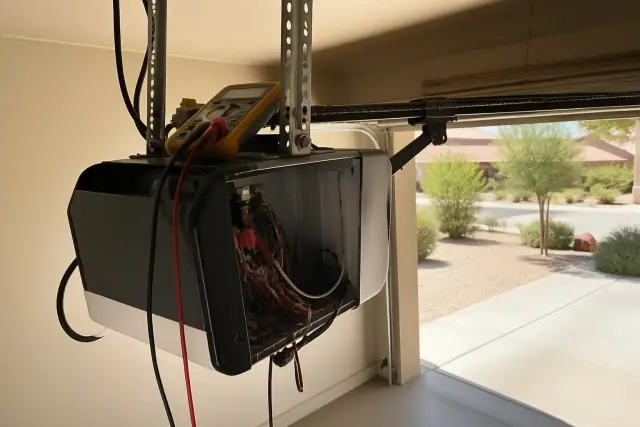
Garage door opener motor assembly under repair with a multimeter in Phoenix, AZ.

Grinding, hesitation, unexpected reversal, and remotes that stop responding can point to drive-gear, logic-board, sensor, or door-balance trouble. We evaluate the opener and the door hardware together so a repair does not leave the motor fighting an underlying mechanical problem.

Request Estimate

Spring and Cable Service

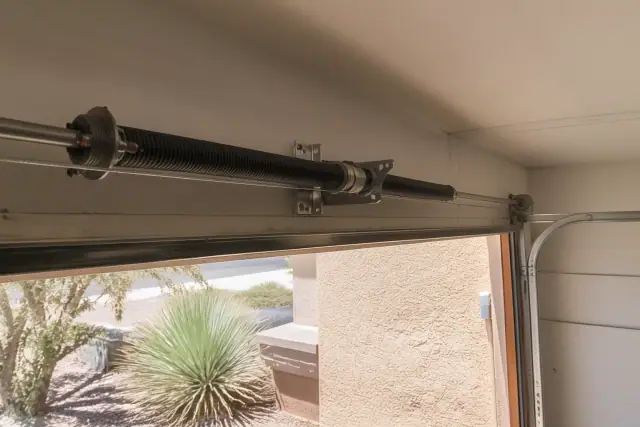
New torsion springs and cables installed on a garage door header in Phoenix, AZ.

Torsion springs are commonly rated for 10,000 to 15,000 cycles, while older Sunnyslope and Maryvale homes may still use extension springs along the horizontal tracks. We size replacements to the door's weight and address frayed or snapped cables so the new opener receives a balanced load.

Request Estimate

New Garage Door Installation and Replacement

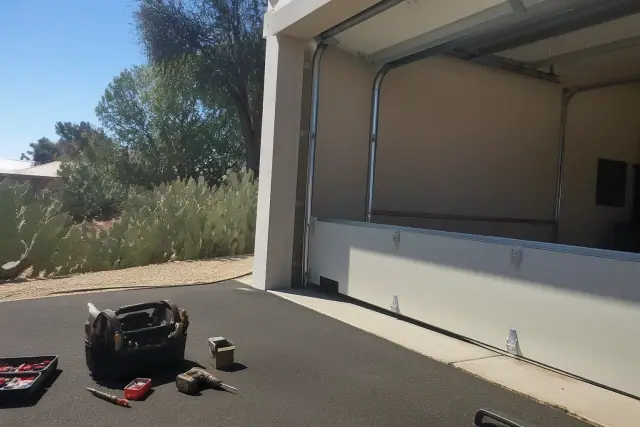
Garage door installation with tools and cacti on a driveway in Phoenix, AZ.

When the project includes a new or replacement garage door, we account for the door material, insulation, dimensions, and required lift capacity before selecting an opener. Structural changes to the opening are identified before equipment installation begins.

Request Estimate

Off-Track, Panel, and Roller Repair

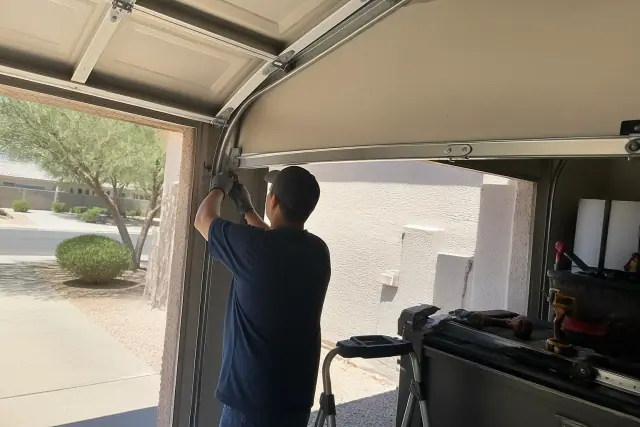
A technician repairing garage door tracks, panels, and rollers at a home in Phoenix, AZ.

A door that is off its tracks or moving on damaged panels and rollers adds resistance the opener was not designed to overcome. We correct those components before calibrating motor force, travel limits, and reversal behavior.

Request Estimate

Commercial Garage Door Service

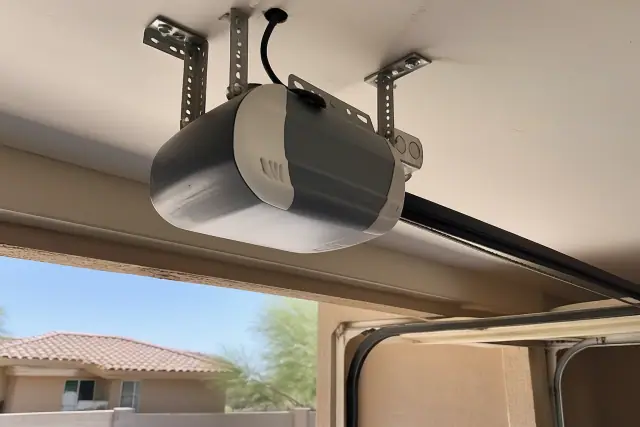
Garage door opener motor mounted to ceiling brackets on a stucco building in Phoenix, AZ.

Commercial rollup doors and daily-use bay doors need opener sizing based on higher cycle frequency and lift demand, unlike a once-a-day residential garage. We install and repair commercial garage door equipment, including systems serving the industrial corridor near Sky Harbor.

Request Estimate
Compare Drive and Mounting Styles

Types of Garage Door Opener Options

Drive and mounting style affect sound, maintenance, clearance, and the load an opener can carry. We compare the practical tradeoffs of each option against the door and garage rather than selecting equipment by features alone.

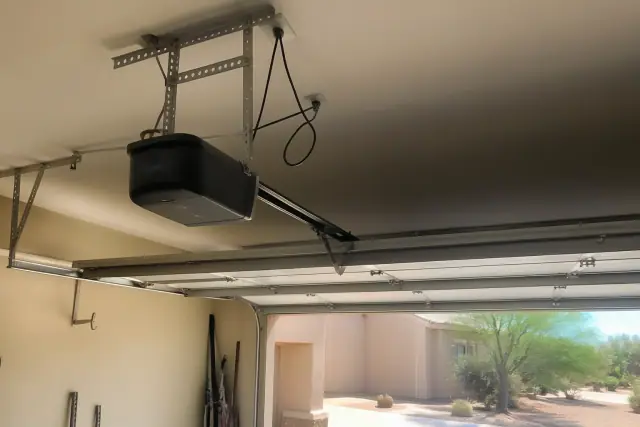
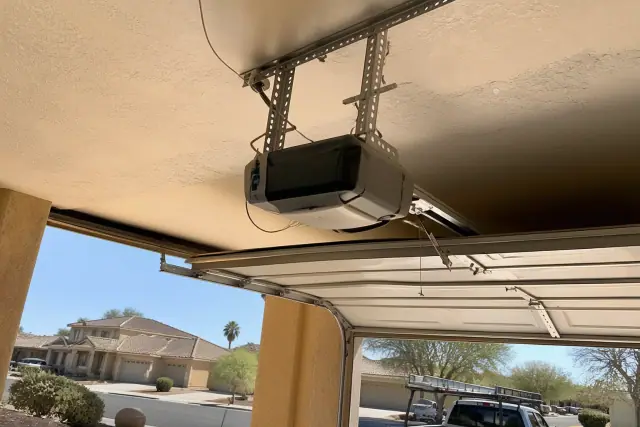
Chain-drive garage door opener motor mounted to a ceiling in a Phoenix, AZ garage.

Chain-Drive Openers

A chain-drive opener uses a metal chain to move the trolley. It is a durable, affordable choice for detached garages and workshops where operating noise is less important.

  • Metal-chain trolley drive
  • Durable design for practical daily use
  • Affordable option without added smart features
  • Well suited to detached garages and workshops
  • Selected to match door weight and lift demand
Request Estimate
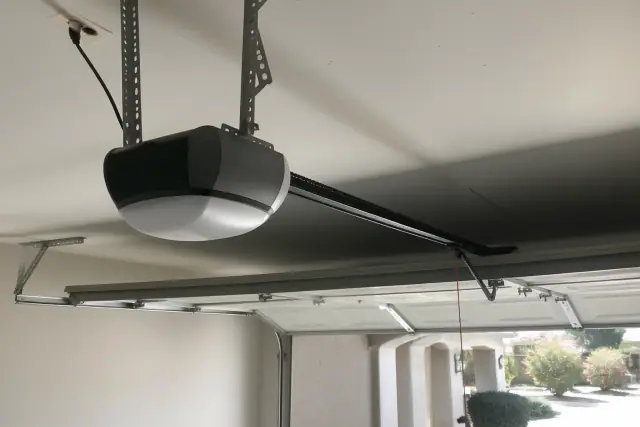
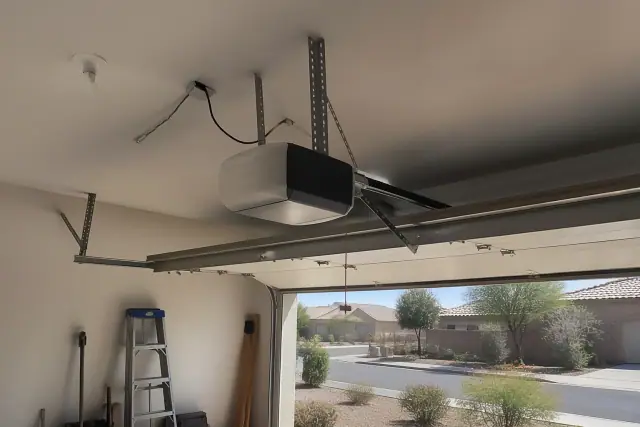
Belt-drive garage door opener motor mounted to a ceiling in Phoenix, AZ.

Belt-Drive Openers

Belt-drive openers use a reinforced rubber belt for quieter travel. They are a strong fit for attached garages and homes near downtown Phoenix or the Melrose District where living space may sit close to the garage.

  • Reinforced rubber-belt drive
  • Quieter operation than a metal chain
  • Useful beside bedrooms and other living areas
  • Available with remote and smart-access features
  • Matched to the door's weight and ceiling layout
Request Estimate
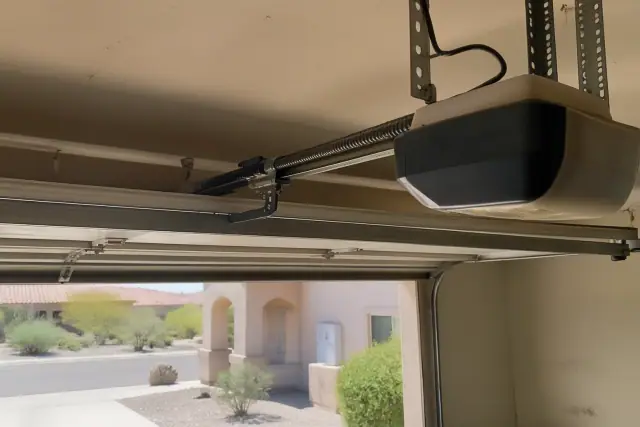
Screw-drive garage door opener installed on a residential ceiling in Phoenix, AZ.

Screw-Drive Openers

Screw-drive openers move the trolley along a threaded steel rod and generally need less adjustment over time. Phoenix heat and dust make regular lubrication of the screw mechanism especially important.

  • Threaded steel-rod drive
  • Less adjustment over time
  • Lubrication planned for Phoenix heat and dust
  • Clearance verified before installation
  • Force and travel settings fully tested
Request Estimate
Wall-mounted garage door opener installation with tracks and wiring in a Phoenix, AZ garage.

Wall-Mounted Jackshaft Openers

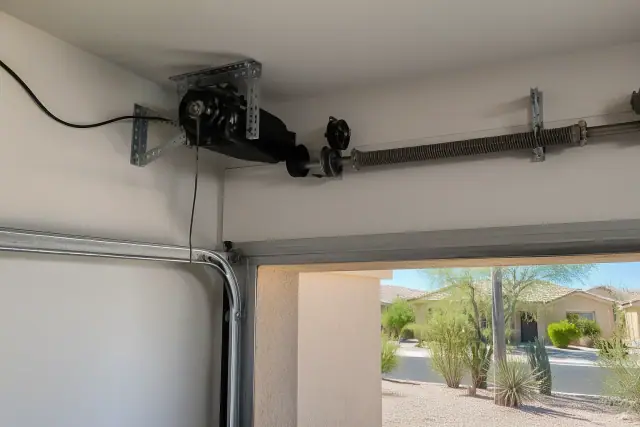
A jackshaft opener mounts at the wall rather than along the center of the ceiling. We consider this configuration when standard trolley-rail clearance is not available or the garage has vaulted ceilings or exposed trusses.

  • Wall-mounted opener configuration
  • Alternative for nonstandard ceiling clearance
  • Useful with vaulted ceilings or exposed trusses
  • Door weight and track arrangement checked first
  • Wiring and control access planned during assessment
Request Estimate
Heavy-duty garage door opener motor mounted to a ceiling in Phoenix, AZ.

Heavy-Duty and Commercial Openers

Heavy-duty openers serve dual doors, oversized insulated steel doors, and commercial bay or rollup doors with greater lift or cycle demands. Motor selection is based on the door material, insulation, dimensions, and operating frequency.

  • Higher lift capacity for larger doors
  • Sizing for insulated steel door weight
  • Equipment selected for commercial cycle frequency
  • Compatible planning for bay and rollup doors
  • Repeated open-close testing before handoff
Request Estimate
Finding Your Right Fit

Choosing the Right Opener Approach

The right opener is determined by door weight, insulation, dimensions, ceiling and header clearance, existing wiring, daily cycles, and noise tolerance. We also discuss battery backup, smart connectivity, remotes, and keypad access so the equipment fits both the door and the way the household or business uses it.

Licensed In-House Technicians

Our installations are completed by licensed in-house technicians rather than subcontractors. The crew carries the training required under Arizona Registrar of Contractors regulations for residential and commercial garage door work.

Phoenix Climate Experience

Our experience spans Arcadia bungalows with original 1950s track systems, new-construction homes in Desert Ridge, and commercial rollup doors near Sky Harbor. That range helps us account for desert heat, dust, monsoon power surges, older hardware, and modern insulated doors without treating every garage alike.

Safety-Calibrated Installation

We follow manufacturer torque and clearance specifications, align monitored safety sensors, and set travel and force controls only after checking door balance. The final verification includes a physical-obstruction test of the automatic reversal system.

What Sets Us Apart

Why Choose Us for Garage Door Opener Installation?

Phoenix Garage Door Repair Co. evaluates the complete moving system before recommending an opener. Customers receive a clear discussion of drive style, required clearance, equipment features, installation scope, and pricing before work begins, followed by programming and safety testing before handoff.

Request Installation Estimate

Heat-Worn Gears and Lubricant

Sustained garage heat can degrade plastic drive gears and dry lubricant, especially in unventilated spaces exposed to afternoon sun. Metal-gear drive choices and periodic maintenance tune-ups can address the operating demands of Phoenix garages.

Grinding or Hesitating Operation

Grinding, hesitation, a failure to respond to remotes, or an opener that stops can signal trouble in the drive gear, logic board, controls, or the door itself. Diagnosis should include the full moving system rather than the motor alone.

Misaligned Safety Sensors

Photo-eye sensors that are out of alignment can interrupt closing or prevent dependable reversal. We position, align, and test the monitored beam so breaking it triggers an immediate response from the opener.

Unbalanced Door and Spring Strain

A weak or failed spring shifts the door's weight to the opener, while damaged cables can pull the system out of balance. Installing a motor without correcting that load causes unnecessary strain on gears and other components.

Undersized Opener Motor

An undersized motor can strain against an oversized or insulated door and fail before its expected service life. Proper load calculations account for material, insulation, dimensions, lift capacity, and how often the door operates.

Unsafe DIY Settings or Mounting

Common DIY problems include sensors left out of alignment, force settings raised to mask a weak spring, and brackets anchored into drywall instead of framing. Spring tension and electrical assembly also create hazards when the door has not first been checked for balance and safe operation.

How It Works

Our Garage Door Opener Installation Process

Every opener installation follows a consistent sequence that starts with the door and ends with safety verification. The steps account for the existing hardware, mounting structure, selected controls, and final force and reversal settings.

01.

Inspect the Door and Hardware

We inspect door balance, springs, cables, rollers, and track alignment before selecting or mounting a new opener. Worn hardware is identified so it does not transfer excess strain to the new motor.

02.

Confirm Equipment and Scope

We review drive type, horsepower, clearance, wiring, battery backup, smart access, controls, and pricing. The recommendation is tied to the door's load and the customer's noise and access preferences.

03.

Remove Old Equipment and Prepare

The old unit is removed when necessary, then ceiling framing and mounting points are inspected. We also confirm that header and rail clearance meet the selected manufacturer's minimum specification.

04.

Assemble and Mount the Opener

We assemble the rail, secure the motor to suitable framing, complete the required wiring, and position the safety sensors. A typical installation takes 2 to 4 hours depending on drive type, existing wiring, and whether old equipment must be removed.

05.

Program Controls and Access

Vehicle remotes, the entry keypad, and app-based access are programmed during the visit when included with the selected unit. We then show the customer how to add or remove authorized users.

06.

Test Travel, Force, and Reversal

We run repeated open-close cycles, check travel and force settings against manufacturer specifications, break the sensor beam, and test auto-reverse with a physical obstruction. The installation is complete only after the system responds correctly.

Plan Your Installation

Schedule a Garage Door Opener Consultation

Tell us what the opener is doing, how the garage is configured, and which access features matter to you. Phoenix Garage Door Repair Co. will inspect the door, explain compatible options and pricing, and define the installation scope before work begins.

Installation Help

Garage Door Opener Installation FAQs

These answers cover installation time, clearance, cost, drive types, safety, permitting, lifespan, and equipment selection for Phoenix garage door openers.

Call Our Technicians

Most professional installations take between 2 and 4 hours. An existing-rail swap may be closer to 2 hours, while a full rail assembly, wiring, and safety-sensor calibration can take closer to 4 hours; commercial or dual-door setups can take longer.

Most residential trolley-style openers need a minimum of about 2 inches above the highest point of door travel for the rail bracket. High-lift, vertical-lift, or low-headroom tracks can require 12 inches or more depending on the connecting arm, so header and ceiling clearance should be measured before equipment is selected.

Phoenix garage door opener installation typically ranges from $262 to $613, with most homeowners spending around $414 for a mid-range chain- or belt-drive unit including labor. Contractor-grade units often run near $300 installed, while belt-drive models with one remote included can land closer to $350; horsepower, drive type, smart features, battery backup, wiring, and reusable brackets affect the final amount.

A basic swap is possible for someone comfortable with electrical and mechanical assembly, but the door should first be confirmed balanced and safe. Misaligned sensors, excessive force settings, brackets anchored to drywall, and spring-tension hazards are common reasons to have a professional inspect or install the system.

Chain-drive openers use a metal chain and emphasize affordability and durability, though they are louder. Belt drives use a reinforced rubber belt for quieter attached-garage operation, while screw drives use a threaded steel rod and need less adjustment but more regular lubrication in Phoenix heat and dust.

A standard opener replacement typically does not require a City of Phoenix permit because it does not alter the structure. A new garage door or structural modification to the opening may require permitting depending on the project scope, so documentation needs should be identified during planning.

Garage door openers generally last 10 to 15 years, but sustained heat in unventilated garages facing west or south can shorten that lifespan by degrading plastic gears and drying lubricant. Metal-gear drive units, current force settings, lubrication, and maintenance tune-ups can help the system handle local conditions.

The installation includes the motor unit, rail assembly, safety sensors, one or two remotes, keypad programming, and complete system testing. When the selected unit supports app access, that setup can be programmed during the same visit.

Yes. Springs and cables carry and balance the door's weight, so worn or failed parts can make a new opener work against an excessive or uneven load. Checking spring tension, cable condition, rollers, and track alignment protects the motor from inheriting an existing mechanical problem.

A belt-drive opener is useful when the garage is attached to the home or shares a wall with a bedroom because its reinforced rubber belt runs more quietly than a metal chain. Door weight, ceiling layout, desired controls, and budget still need to be considered before selection.

Yes, vehicle remotes and keypad entry codes are programmed as part of the installation. App-based access can also be configured when the selected opener includes smart connectivity, and the customer can be shown how to add or delete users.

The photo eyes are aligned so interrupting the monitored beam produces an immediate response. The installer also runs open-close cycles, checks force settings, and tests automatic reversal with a physical obstruction before considering the setup complete.

A typical single-door garage may use a 3/4-horsepower unit, while dual or oversized insulated steel doors often need a heavy-duty opener with greater lift capacity. Sizing should account for door weight, material, insulation, dimensions, balance, and cycle frequency rather than door count alone.