Proudly serving Phoenix, Mesa, Scottsdale, Tempe, Glendale, Chandler & surrounding areasCall or Text 24/7: 602-449-9593
Aerial view of a Phoenix, AZ suburban neighborhood featuring stucco houses, desert landscaping, and Saguaro cacti.

Garage Door Roller Replacement and Smooth-Operation Upgrades in Phoenix, AZ

Phoenix Garage Door Repair Co. provides garage door roller replacement for homes and commercial properties in Phoenix, Arizona. We replace worn nylon and steel rollers, address off-track roller problems, and inspect related tracks, hinges, and brackets. Our broader garage door work includes spring repair and replacement, opener repair and installation, cable repair, panel replacement, maintenance, and new door installation. Each roller recommendation is matched to the door manufacturer's specifications and the way the door is used.

Triple-digit summer heat, seasonal haboob dust, and daily Salt River Valley temperature swings can dry, crack, and wear garage door rollers. A failing roller may squeak, grind, bind, or force the opener to work harder before it finally breaks or leaves the track. We inspect every roller, both tracks, the brackets, and the spring system because a misaligned track can quickly damage a new roller set. A free estimate explains the recommended scope and cost before work begins.

Our technicians follow Door and Access Systems Manufacturers Association guidance for roller sizing, spring tension, and track alignment, and we hold Arizona Registrar of Contractors licensing for the work we perform. We install sealed ball-bearing nylon rollers and case-hardened steel rollers for residential sectional doors and commercial rolling steel doors. After installation, we run multiple full cycles and verify door balance, opener force, travel limits, and auto-reverse safety sensors.

Phoenix Garage Door Repair Co. provides garage door roller replacement in Phoenix and the surrounding Valley cities of Scottsdale, Tempe, Mesa, Glendale, and Chandler.

★ ★ ★ ★ ★4.9/5.0 Customer Rating · 19 Years of Garage Door Experience · Thousands of Doors Serviced · Licensed, Bonded & Insured · Residential & Commercial Service

Garage Door Roller Options & Benefits

What Is Garage Door Roller Replacement?

A garage door typically rides on 10 to 12 rollers seated in vertical and horizontal steel tracks. Hinges connect the roller brackets to the panels, while the rollers carry the door assembly and its counterbalance forces along the track path.

Roller replacement removes worn wheels and stems while the door remains supported, then fits rollers sized for the track pocket depth and required stem length. Residential work typically covers 10 rollers per door, while commercial doors may need heavier-duty rollers rated for higher cycle counts.

The service also addresses the conditions that caused the wear. Track cleaning, alignment checks, hinge and bracket inspection, and final operating tests help the replacement rollers move with less resistance and reduce unnecessary load on the opener, springs, and panels.

Benefits of Replacing Worn Rollers

Correctly sized rollers that are round, properly seated, and matched to the door can restore smoother travel through the tracks. Choosing the right material also balances noise, load, cycle frequency, and maintenance needs.

  • Quieter travel with sealed nylon ball-bearing rollers
  • Less binding and resistance along the track path
  • Reduced unnecessary load on the opener motor and drive gear
  • Roller material matched to door weight and cycle frequency
  • Track dust and grit removed before new rollers are tested
  • Early correction of cracked, chipped, or flat-spotted wheels
  • Inspection of stems, hinges, brackets, tracks, and springs
  • Operating and safety checks after installation
Roller Replacement Services

Garage Door Roller Services

Our Phoenix roller service covers the door hardware, track conditions, and operating checks that influence how long new rollers perform. Recommendations are based on the door type, existing track, roller condition, load, cycle frequency, and noise tolerance.

Complete Roller Replacement

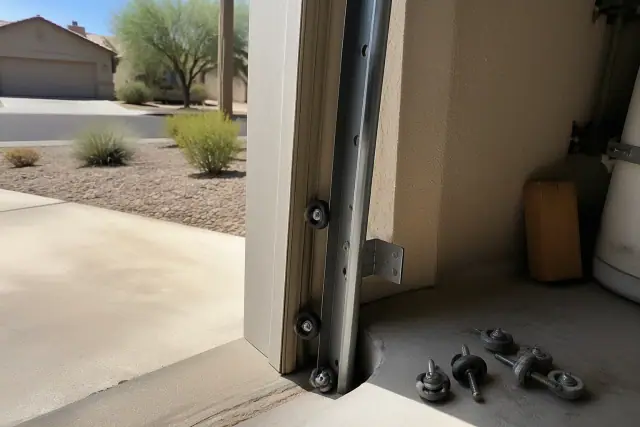
New steel garage door rollers installed in tracks with old rollers on the floor at a home in Phoenix, AZ.

We inspect the full roller set and replace worn units one at a time while keeping the door supported and controlled. New rollers are matched to the track pocket, stem length, manufacturer specifications, and intended use of the door.

Request Estimate

Residential Roller Replacement

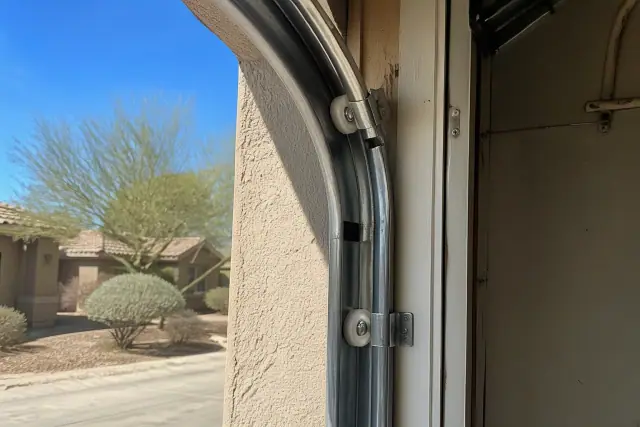
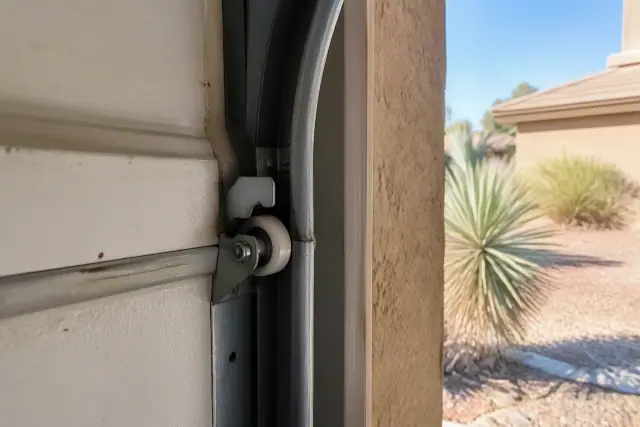
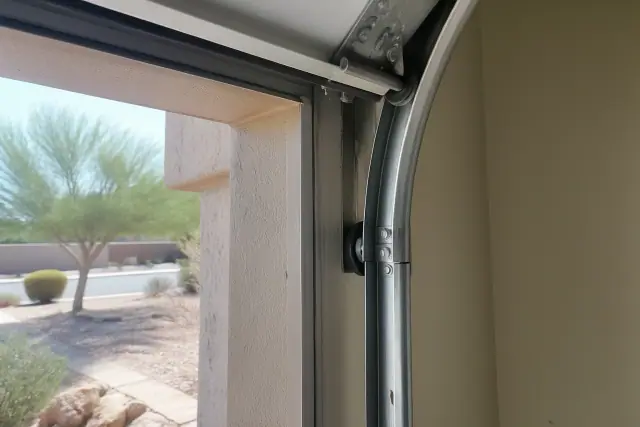
New nylon rollers installed in a garage door track at a home in Phoenix, AZ.

For residential sectional doors, we assess noise needs, daily cycles, door weight, and whether the garage shares a wall with a bedroom. Sealed nylon is often suited to Phoenix homes because it runs quietly and requires less routine lubrication than steel.

Request Estimate

Commercial Roller Replacement

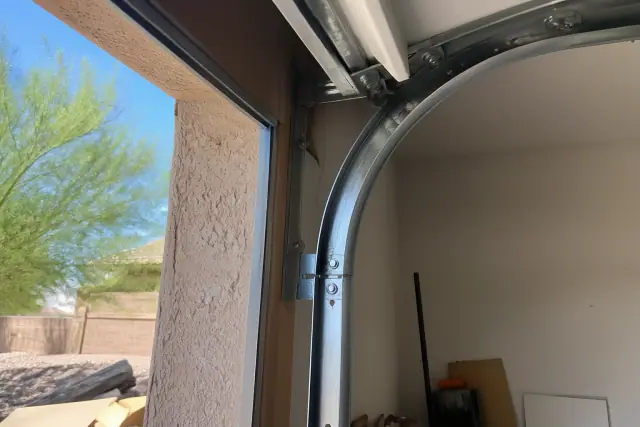
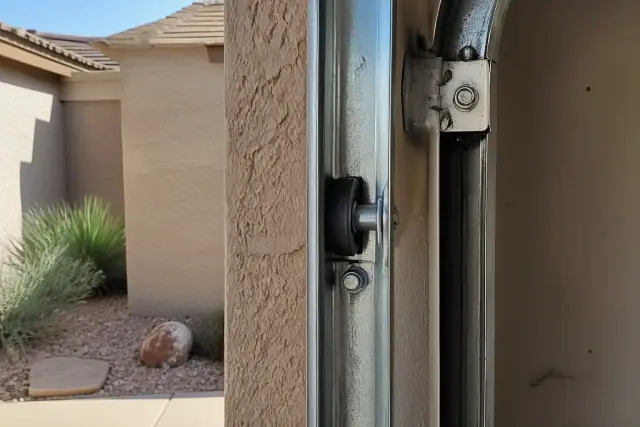
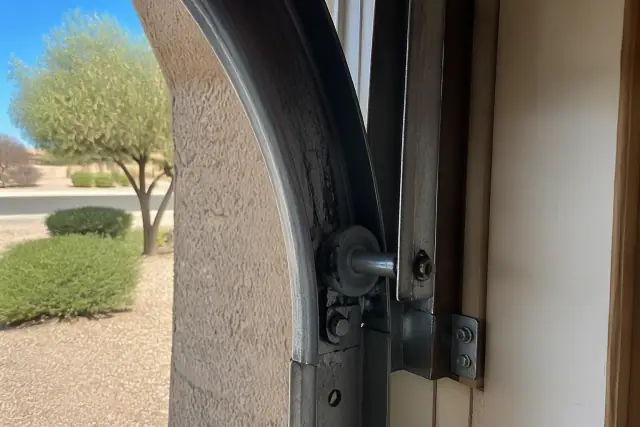
New garage door rollers installed in metal tracks on a stucco wall in Phoenix, AZ.

Commercial rolling steel doors on warehouses, self-storage facilities, and multi-unit properties may require case-hardened steel rollers built for higher loads and cycle counts. We match those rollers to the existing commercial track and inspect the surrounding hardware before installation.

Request Estimate

Track Cleaning and Alignment

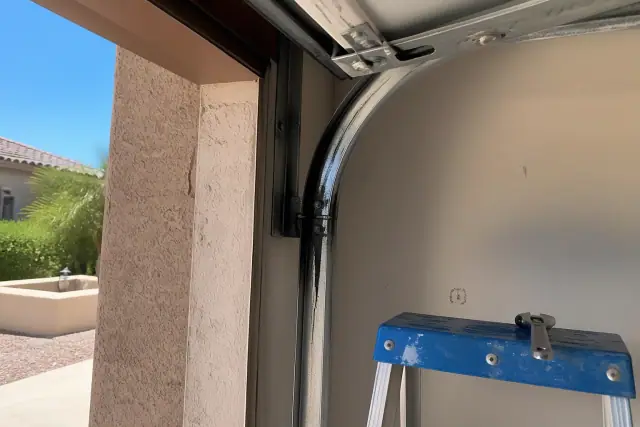
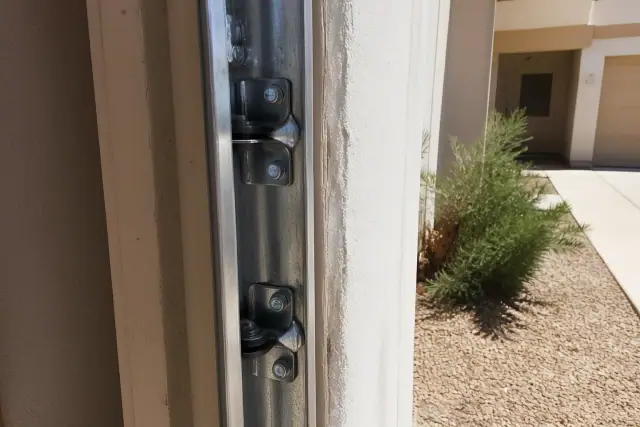
Garage door roller tracks with metal lubricant and tools on a stucco wall in Phoenix, AZ.

Valley dust storms leave grit in the track channel, where it accelerates roller wear. We clean both tracks, check them against a level and plumb line, and correct alignment issues within the recommended scope before testing the new rollers.

Request Estimate

Off-Track Roller Repair

Technician repairing a displaced garage door roller on an overhead track at a home in Phoenix, AZ.

A roller that has jumped the rail can leave the door binding, hanging unevenly, or at risk of coming off the track. We assess the rollers, track, panels, and cables before operating the door again so the underlying misalignment or damage is not overlooked.

Request Estimate

Roller, Hinge, and Bracket Inspection

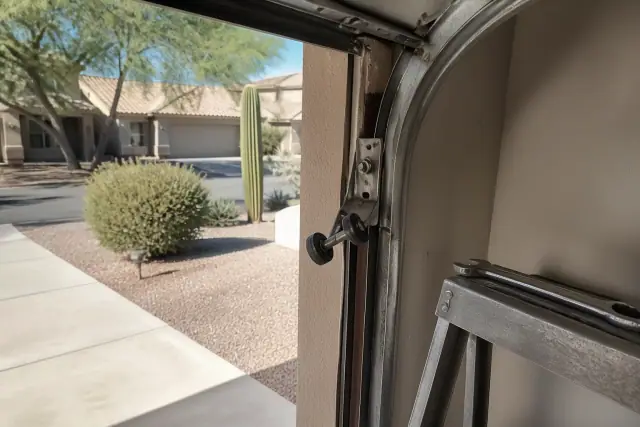
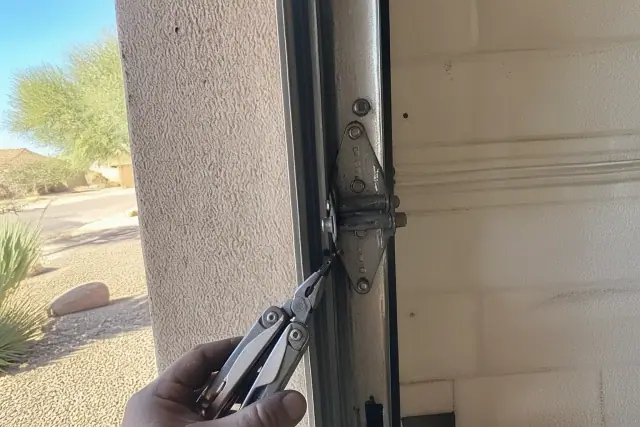
Technician inspecting garage door hinges, rollers, and brackets on a stucco wall in Phoenix, AZ.

Roller wear seldom occurs in isolation. Our inspection checks wheel condition, bearing play, stem straightness, bracket fit, hinge condition, track gap width, and the spring system before we recommend the appropriate repair.

Request Estimate
Roller Material and Size Options

Types of Garage Door Rollers

Garage door rollers differ by wheel material, bearing design, stem length, diameter, and intended load. We confirm track width and existing hardware before ordering parts because the right choice depends on the door rather than a one-size-fits-all preference.

Sealed nylon garage door rollers installed in metal tracks on a stucco home in Phoenix, AZ.

Sealed Ball-Bearing Nylon Rollers

Commercial-grade sealed nylon rollers are a common recommendation for Phoenix homes that need quiet, smooth travel without the same lubrication schedule as steel. Their bearing design and grade distinguish them from basic plastic rollers.

  • Low operating noise
  • Sealed ball-bearing construction
  • Typical 10-15 year lifespan for commercial-grade sealed nylon
  • Suited to high-use residential doors
  • Well suited to attached, noise-sensitive garages
Request Estimate
Steel ball-bearing garage door rollers installed in a vertical metal track at a home in Phoenix, AZ.

Steel Ball-Bearing Rollers

Steel rollers handle heavier cycle counts and loads, making them a practical match for many commercial doors and detached garages. They run louder than nylon and need periodic lubrication, so their durability comes with a different maintenance and noise profile.

  • Moderate to high operating noise
  • Built for higher loads and cycle counts
  • Quality 10-ball-bearing design
  • Typical 15-20 year lifespan with regular maintenance
  • Periodic lubrication required
Request Estimate
Standard nylon rollers installed in a garage door track at a home in Phoenix, AZ.

Standard Nylon Rollers

Standard nylon offers low-noise operation, but basic plastic roller grades are more vulnerable to sustained Arizona heat. Heat-dried wheels can become brittle, crack, chip, or develop flat spots that disrupt smooth door travel.

  • Low operating noise
  • Typical 5-7 year standard-nylon lifespan
  • Standard-grade plastic may degrade in 3-4 years under sustained Arizona heat
  • Common for attached, noise-sensitive garages
  • Requires inspection for cracking and flat wear
Request Estimate
2-inch residential garage door rollers installed in metal tracks at a home in Phoenix, AZ.

2-Inch Residential Rollers

Most residential garage doors use 2-inch rollers matched to a 2-inch-wide track. The roller wheel itself measures roughly 1.75 inches in diameter, so track width and wheel diameter should not be treated as the same measurement.

  • Common on residential sectional doors
  • Matched to a 2-inch-wide track
  • Roughly 1.75-inch wheel diameter
  • Typically 10 replacement rollers per residential door
  • Stem length and pocket depth confirmed before installation
Request Estimate
Heavy-duty garage door rollers installed in tracks on a sun-bleached stucco home in Phoenix, AZ.

3-Inch and Heavy-Duty Rollers

Older or heavier doors may use 3-inch rollers on a wider track, while commercial doors can require roller grades made for greater load and cycle demands. We verify the track and door hardware rather than selecting a larger roller from door size alone.

  • Found on some older or heavier doors
  • Requires a wider compatible track
  • Heavy-duty grades serve higher load demands
  • Commercial options serve higher cycle counts
  • Track width must be confirmed before parts are ordered
Request Estimate
Finding the Right Fit

Choosing the Right Roller Replacement Approach

The right roller depends on door weight, track width, stem length, cycle frequency, noise tolerance, and current track condition. Our recommendation considers whether the door is residential or commercial, how often it runs, and whether quieter operation or heavier-duty service is the greater priority.

Manufacturer-Matched Roller Sizing

We match wheel diameter, stem length, and roller pocket depth to the manufacturer's door specifications and existing track. That fit matters for both residential sectional doors and commercial rolling steel doors.

Full Track and Hardware Inspection

Every complete roller service checks all rollers, both tracks, brackets, hinges, and the spring system. A track out of alignment by even a quarter inch can prematurely wear a new roller set, so alignment is part of the recommendation rather than an afterthought.

Licensed, DASMA-Guided Work

Phoenix Garage Door Repair Co. holds Arizona Registrar of Contractors licensing for the work we perform. Our technicians follow Door and Access Systems Manufacturers Association guidance when evaluating roller size, spring tension, and track alignment.

What Sets Our Service Apart

Why Choose Us for Roller Replacement?

A roller swap should solve the cause of rough travel, not just exchange visible parts. We inspect the track and related hardware, explain whether nylon or steel fits the door's use, and provide a free estimate before beginning the recommended work.

Get a Free Estimate

Squeaking, Grinding, or Scraping

Roller wear often announces itself as a light chirp that develops into grinding or scraping over several weeks. Lubrication can buy time, but it will not permanently repair a worn nylon bearing race.

Hesitation, Jerking, or Stalling

A door that hesitates, jerks, or stalls partway through a cycle may have rollers binding in the track or riding on flat spots. The extra resistance makes the opener draw more current and can shorten the life of its motor and drive gear.

Cracked or Flat-Spotted Nylon

Phoenix heat can leave nylon wheels brittle, cracked, chipped, or visibly flat where they should remain round. Those defects interrupt smooth travel and can worsen as the door cycles multiple times a day.

Rust-Pitted or Wobbling Steel

Steel roller wear commonly appears as rust pitting, a flat spot, or wobble where the stem seats in the bracket. Periodic lubrication supports steel roller life, but damaged wheels, bearings, or stems still require replacement.

Off-Track or Misaligned Door

An off-track roller is a safety problem because the door can bind, drop unevenly, or leave the rail entirely. Running the opener in that condition can bend panels or snap cables, so the door should remain stopped until the track and hardware are assessed.

Strain on the Opener and Hardware

Cracked or flat-spotted rollers increase resistance through the whole door system. The opener drive mechanism, springs, tracks, panels, and cables can all experience added stress when rollers are not moving freely.

How It Works

Our Garage Door Roller Replacement Process

The process moves from inspection and part selection through controlled replacement, track preparation, and final safety testing. Each step is designed to identify the reason for the wear and confirm that the complete door travels correctly after the new rollers are installed.

01.

Free Estimate and Full Inspection

We begin by explaining the estimated scope and cost, then inspect every roller, both tracks, the brackets, hinges, and spring system. Visible wheel damage, bearing play, stem straightness, and track condition guide the recommendation.

02.

Measure the Roller and Track

We confirm wheel diameter, track width, roller pocket depth, and stem length before selecting parts. Door weight, cycle frequency, noise tolerance, and manufacturer specifications determine whether sealed nylon or steel is the appropriate fit.

03.

Support the Door and Remove Worn Rollers

The door remains supported and controlled while worn rollers are removed one at a time. This approach keeps the panels stable and allows the adjoining hinges and brackets to be checked as each roller is serviced.

04.

Install the Matched New Rollers

New sealed nylon or case-hardened steel rollers are fitted to the existing track and brackets. We verify that each stem sits correctly and that the wheels travel without wobble or binding.

05.

Clean and Align the Tracks

Dust and grit are cleared from the track channels before the tracks are checked with a level and plumb line. Because even a quarter-inch alignment error can wear new rollers prematurely, track position is corrected as the condition and agreed scope require.

06.

Cycle Test and Safety Verification

We run the door through multiple full cycles while checking balance, listening for noise, and watching roller travel. The final check also covers the opener's force and travel-limit settings and the auto-reverse safety sensors.

Restore Smoother Door Travel

Schedule a Garage Door Roller Estimate

If your garage door squeaks, grinds, jerks, stalls, or has a roller outside the track, request an inspection before added resistance damages more hardware. Phoenix Garage Door Repair Co. will assess the rollers and track, explain the options, and provide a free estimate before the recommended replacement begins.

Roller Replacement Help

Garage Door Roller Replacement FAQs

These answers cover roller replacement costs, warning signs, material and size choices, track conditions, and what to expect from service in Phoenix. A door-specific inspection is still necessary to confirm the roller grade, dimensions, and related hardware work.

Call Our Roller Experts

A standard complete roller replacement with parts and labor typically runs $150-$250 in the Phoenix market. Fuller-scope work involving all rollers, hinge inspection, and track adjustment can reach $434-$870 depending on door size and roller grade.

Licensed technician labor for a straightforward roller swap on a standard steel door generally falls in the $300-$500 range including parts, while simpler jobs with fewer rollers or minimal track work can land lower. Spring adjustment, panel realignment, roller count, roller material, and commercial hardware can add time and cost.

Common signs include squeaking, grinding, scraping, hesitation, jerking, stalling, vibration, or visible cracking and flat spots. Steel rollers may show rust pitting or stem wobble, while a roller outside the track can leave the door uneven or bound.

A garage door commonly rides on 10 to 12 rollers across its vertical and horizontal tracks. A typical residential replacement covers 10 rollers per door, while commercial configurations vary with the door and required cycle rating.

Sealed nylon rollers run quieter and need less routine lubrication, which often suits attached Phoenix garages. Steel ball-bearing rollers handle higher loads and cycle counts but operate louder and require periodic lubrication, so door weight, use, and noise tolerance determine the better fit.

Typical lifespans are 5-7 years for standard nylon, 10-15 years for commercial-grade sealed nylon, and 15-20 years for quality steel ball-bearing rollers with regular maintenance. Standard-grade plastic may degrade in 3-4 years under sustained Arizona heat, so roller grade and exposure matter.

Lubrication may temporarily quiet a roller and is part of steel-roller maintenance. It cannot permanently repair a worn bearing race, cracked nylon, flat spot, bent stem, or damaged wheel.

A bent, dirty, or misaligned track can wear new rollers as quickly as the old set. Dust and grit are cleared from the channel, and the track is checked with a level and plumb line because even a quarter-inch alignment error can shorten roller life.

No. An off-track door can bind, drop unevenly, or leave the rail, and operating the opener can bend panels or snap cables. Stop using the door until the rollers, track, panels, and cables can be assessed.

Most residential doors use 2-inch rollers in a 2-inch-wide track, with a wheel diameter of roughly 1.75 inches. Some older or heavier doors use 3-inch rollers and wider tracks, so track width, pocket depth, stem length, and manufacturer specifications must be confirmed.

The service includes inspection of all rollers, both tracks, roller brackets, hinges, and the spring system; controlled roller removal; installation of matched parts; track cleaning and alignment checks; and multiple full operating cycles. Final verification covers balance, noise, opener force and travel limits, and auto-reverse safety sensors.

Yes. Binding, cracked, or flat-spotted rollers make the opener draw more current and place added load on the motor and drive gear. Worn rollers can also add stress to the springs, tracks, panels, and cables.

When the tracks and panels are still serviceable, replacing worn rollers usually addresses the failed component without replacing the full door. Complete sliding or sectional door replacement runs $800-$6,000 depending on materials, so the track, panels, springs, and hardware should be inspected before deciding on scope.