Typical Full-Set Cost
On a standard two-car steel residential door, a full set of nylon rollers typically runs $300-$500 installed. A full set usually means 10-14 rollers, depending on door height.
If noisy, bent, or broken rollers are making your garage door grind, squeak, or shudder, Phoenix Garage Door Repair Co. can help you understand the likely scope. In Phoenix, a professional full-set replacement on a standard steel residential door typically costs $300-$500, while roller type, door size, and bracket or track condition can move the price.
On a standard two-car steel residential door, a full set of nylon rollers typically runs $300-$500 installed. A full set usually means 10-14 rollers, depending on door height.
Door weight, roller material, roller count, bracket condition, and track alignment all affect price. A 16-foot double door with steel rollers generally takes more material and labor than a single 8-foot door with nylon rollers.
Replacing one or two worn rollers typically costs $100-$150 with labor. When three or more rollers show wear, compare a full-set replacement so old and new rollers do not create uneven door movement.
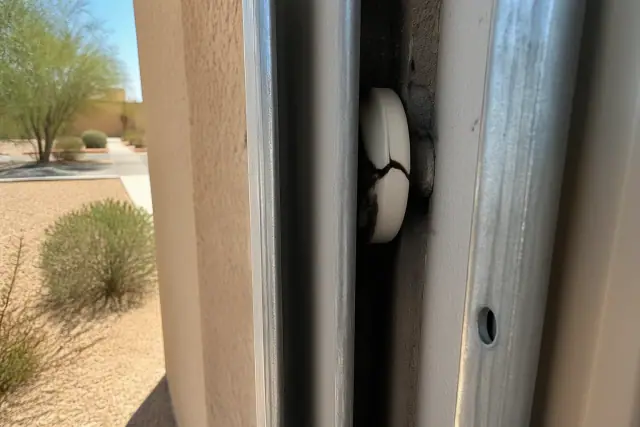
Visible wear grooves, a cracked nylon housing, and dust around the bearing. These details help connect squeaking or shuddering with roller wear.
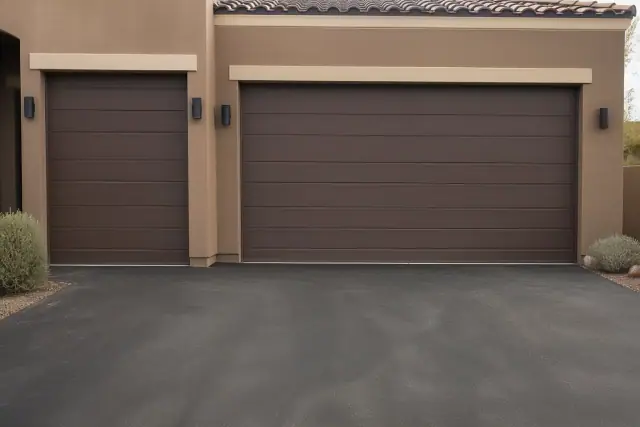
Compare the roller count, door weight, and access on each door. The larger double door can require more rollers and a more involved installation.
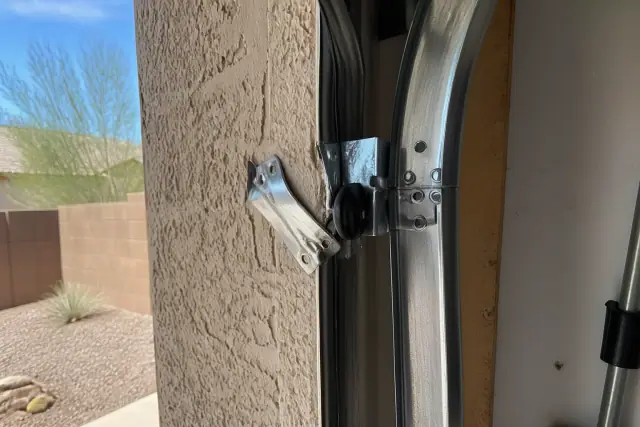
A bent or rusted bracket beside the roller stem and track. Replacing a damaged bracket can add $15-$40 per bracket to the roller job.
One roller runs $25-$60 installed. Full plastic or nylon sets run $150-$300, sealed-bearing nylon sets run $300-$500, and heavy-duty steel sets with bracket work run $500-$870.
Labor typically accounts for $50-$150. Sealed-bearing nylon rollers cost $20-$25 each at retail, while a materials-only set of 10 runs $150-$250.
A standard 10-roller swap takes 30-60 minutes. Bent track, damaged brackets, or heavy-duty commercial hardware can extend the work to 1-2 hours.
Standard rollers last roughly 7-10 years with average residential use, while sealed-bearing rollers typically last 10-15 years with regular maintenance. Phoenix heat, dust, and frequent cycling can shorten those ranges.
| Replacement scope | Typical cost | What the range covers |
|---|---|---|
| Single roller | $25-$60 | One roller installed |
| One or two worn rollers | $100-$150 | Partial repair with labor |
| Full plastic or nylon set | $150-$300 | Standard installed set |
| Sealed-bearing nylon set | $300-$500 | Full professional installation |
| Heavy-duty steel set | $500-$870 | Installation with bracket work |
| Commercial roller replacement | $500-$1,200 | Higher-cycle doors; size and grade change cost |
Roller replacement pricing covers the rollers and labor to remove the worn parts and install the new set; brackets and stems may be added when their condition requires it. A complete professional service can also include a track inspection, cable and hinge adjustments when needed, lubrication, and a functional check of door movement.
Retail prices vary by construction: steel rollers often cost $10-$15 each, nylon rollers $19.99-$23.99 each, sealed-bearing rollers about $25 each, and heavy-duty rollers $30-$45 each. Door weight, access, track alignment, and rusted or elongated bracket holes also affect labor; bracket wear is especially worth checking on doors older than 12-15 years, while Phoenix heat and gritty dust can accelerate roller wear.
DIY materials alone can cost $50-$200, but top rollers near the spring system expose homeowners to dangerous stored tension. Bottom rollers may look straightforward, yet bracket removal, track alignment, and door balance can complicate safe installation. Heavy use or missed maintenance can shorten a typical replacement interval to 5-7 years, so an annual visual and audio check for grinding, squeaking, cracks, or shuddering is useful.
Describe the noise or movement you notice, the door size, and whether any rollers or brackets look damaged. An inspection can confirm roller count, material options, track condition, and the appropriate repair scope before work begins.