Typical Garage Door Lifespan
A standard residential garage door generally lasts 15-30 years, but the material and level of care determine where it falls within that range.
Phoenix Garage Door Repair Co. explains that a standard residential garage door typically lasts between 15 and 30 years, while its springs, cables, rollers, and opener follow shorter schedules. In Phoenix, intense heat, UV exposure, monsoon humidity swings, and fine desert dust make material, usage, and maintenance especially important when estimating remaining service life.
A standard residential garage door generally lasts 15-30 years, but the material and level of care determine where it falls within that range.
Phoenix sun and temperature swings age finishes and seals, dust loads tracks and rollers, and frequent opening cycles wear springs and opener parts sooner.
Compare door age, repair history, panel integrity, spring and cable wear, track alignment, roller condition, balance, and opener performance before deciding.
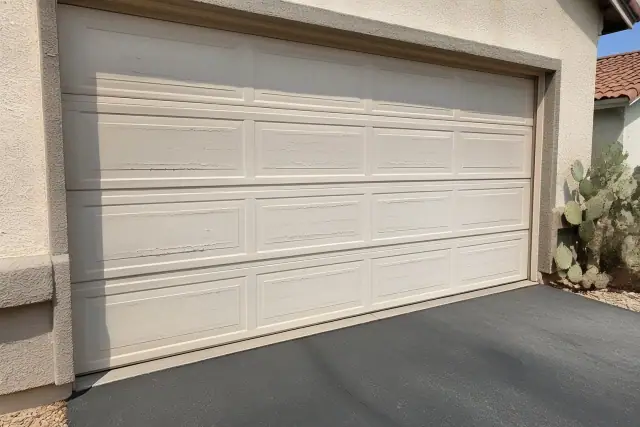
Direct west-sun exposure on steel, wood, and fiberglass panels. Fading, checking, warping, dents, and cracks reveal how material and orientation affect lifespan.
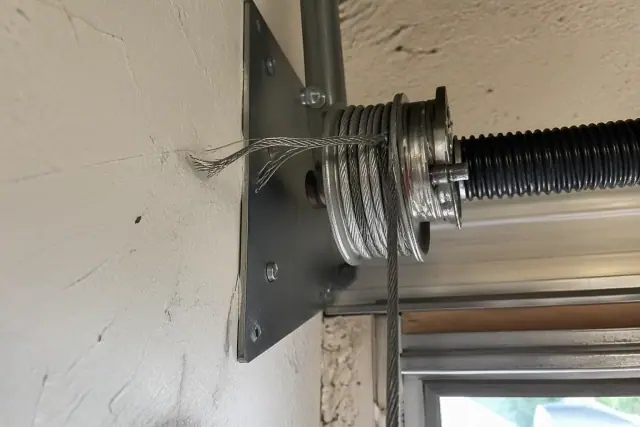
Rust or coil gaps on a torsion spring, cable fraying near the bottom bracket, and flat spots on rollers. These details help separate component wear from panel aging.
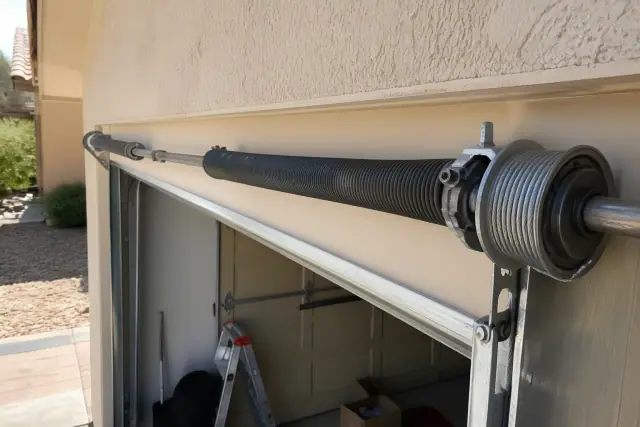
A professional checking door balance, track alignment, opener force settings, and safety sensors. A struggling or reversing opener can signal a poorly balanced door rather than a failed motor.
Steel usually delivers the longest range when its coating stays intact; wood needs regular refinishing, aluminum resists rust but dents, and fiberglass handles heat swings better than wood.
A door opened twice a day accumulates far less spring, roller, and opener wear than one cycling six or eight times daily.
Replacement becomes more practical when three or more condition checks show significant wear on a door older than 15 years, or springs have failed twice within a few years.
Plan professional service once a year for residential doors and twice a year for higher-cycle commercial doors, with a basic visual check each month.
| Door or Component | Typical Lifespan | What Shortens It in Phoenix |
|---|---|---|
| Steel garage door | 20-30 years with proper care | Damaged coatings, direct sun, and neglected weatherstripping |
| Wood garage door | 15-20 years | Dry heat, west-sun exposure, and missed refinishing |
| Aluminum garage door | 15-20 years | Dents and finish chalking under sustained UV exposure |
| Fiberglass garage door | 20-25 years | Panel damage and repeated heat swings |
| Torsion springs | 10,000-15,000 cycles, usually 7-12 years | High daily cycle counts, rust, and incorrect spring sizing |
| Garage door opener | 10-15 years | Poor door balance, motor strain, worn gears, and heat |
Most residential doors in Phoenix last 15-25 years, with maintained steel doors often reaching 20-25 years. Steel is common from Ahwatukee to Anthem, while fiberglass can suit high-exposure areas near South Mountain; wood may need refinishing every few years to limit checking and warping. Care makes a visible difference: some neglected 12-year-old doors can look twice their age, while maintained 25-year-old doors may still operate smoothly.
Swings between 115-degree summer afternoons and 40-degree winter nights expand and contract metal, loosening fasteners and stressing panels and welded joints. Sustained temperatures above 110 degrees can soften weatherstripping and paint finishes, while monsoon moisture promotes rust and fine dust binds tracks and rollers. Installation quality, spring sizing, track alignment, preventive maintenance during the first 5 years, and door weight also matter: a 16-foot steel double door places different demands on its springs and opener than a standard single door.
Should you repair or replace the door? An isolated spring, cable, or roller repair usually makes sense on a door under 15 years old, while a second or third repair within a few years or costs near half of replacement favor a new door. Torsion springs typically last 10,000 to 15,000 cycles, so an original spring on a door over 10 years old deserves close attention; matched-pair replacement can prevent uneven wear. Openers generally last 10-15 years, and a unit over 10 years old that lacks modern safety-reversal sensors may be a better replacement candidate than a repair. A typical 20-30 minute inspection checks springs, cables, rollers, tracks, panels, weatherstripping, hardware torque, door balance, opener force, and safety reversal before estimating remaining service life.
Share the door's age, material, daily use, repair history, and current symptoms. A Phoenix garage door inspection can evaluate panels, springs, cables, rollers, tracks, balance, weatherstripping, and opener performance before recommending maintenance, repair, or replacement.