Stop and Secure the Door
Treat the door as a fixed wall. Unplug or disconnect the opener, block access to the opening, and leave any vehicle inside if the door is sagging or partially down.
If your cables have snapped or come off a drum, Phoenix Garage Door Repair Co. recommends that you stop using the garage door immediately, disconnect the opener, and keep everyone clear because the spring system may still be under tension. A professional should secure the door, release that tension, identify any drum or track damage, and install the correct replacement cable before the door moves again.
Treat the door as a fixed wall. Unplug or disconnect the opener, block access to the opening, and leave any vehicle inside if the door is sagging or partially down.
A snapped cable does not make the spring harmless. The remaining cable, drum, and torsion spring can shift suddenly, so never lift the door or attempt to wind or unwind the spring.
From a safe distance, photograph the cable, drum, and visible track damage. A technician can then determine whether the job is a cable swap or also involves a worn drum, bent track, tired spring, bearing, or roller.
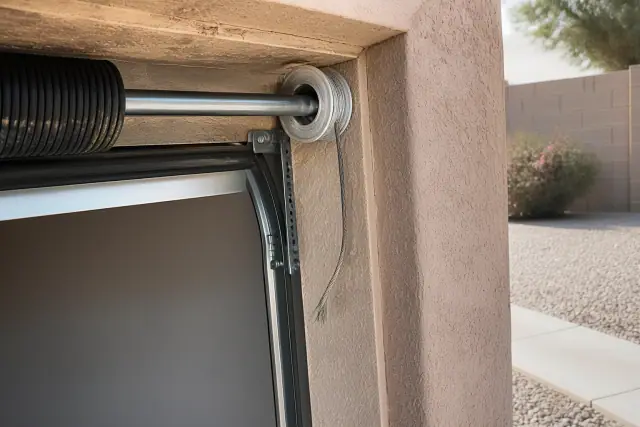
Where the cable separated or left the drum while the spring system remains loaded. This makes the hidden tension and uneven door support clear.
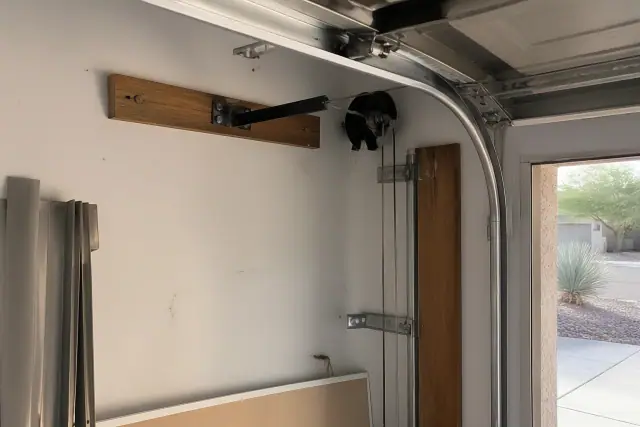
Compare a torsion cable running from the bottom bracket to the drum with an extension-system lift cable routed over pulleys. The correct path, gauge, and length are specific to the spring setup and door weight.
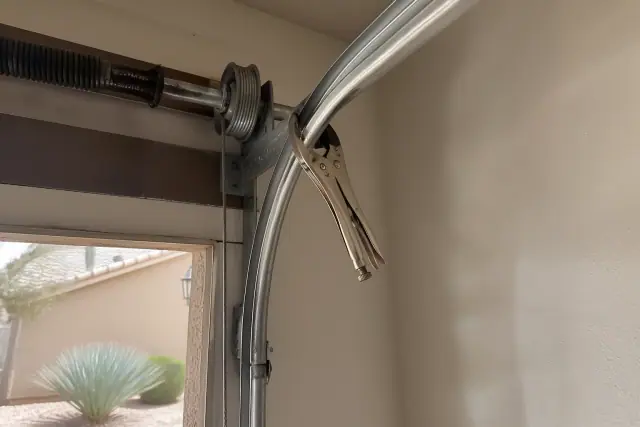
The door clamped to the track before calibrated winding bars release spring tension. This setup illustrates why improvised tools and an unsupported door are unsafe.
Without entering the track area, note whether the cable snapped, frayed, or slipped off the drum and whether the door is level. Photograph visible damage only if you can do so without standing beneath or touching the door.
Door weight and size, cable gauge, torsion versus extension springs, cycle count, and wear at the drums, bearings, rollers, or track determine whether the work stays a cable replacement or expands to related hardware.
Act immediately by stopping operation and isolating the opening. A broken, loose, or badly frayed cable is a safety condition, not a problem to monitor while continuing to use the door.
Do not force the door with the opener, lift it by hand, loosen a bottom bracket, turn a drum, or substitute a generic cable kit. Each action can release stored energy or further unbalance the door.
| What You See | What It Means | Safe Response |
|---|---|---|
| Cable snapped or off the drum | Spring tension may remain while the door has lost balanced support. | Disconnect the opener, clear the area, and call a technician. |
| Door tilted, sagging, or partly down | The uneven load creates a sudden-drop risk. | Do not lift the door or move a vehicle beneath it. |
| Door open and apparently stable | The position can change if the remaining cable or drum shifts. | Keep the opening clear and do not try to close the door. |
| Cable frayed or corroded but intact | Visible strand damage can precede a complete break. | Stop operating the door and arrange an inspection. |
The cable shares the door's weight with the spring system; once one cable snaps, the remaining cable and drum can take an uneven load while the torsion spring stays charged. That is why even a door that looks stationary can tilt or drop when disturbed. A safe repair starts by clamping the door, releasing spring tension with calibrated winding bars, and installing galvanized aircraft cable matched by diameter, strand count, and length to the door's ANSI/DASMA 102 weight rating.
A single-side repair on a standard residential door may cost under $200 when the drum and bearings are sound, while most Phoenix residential cable jobs run $90 to $350 and a full pair typically costs $200 to $300. A standard 30-to-45-minute cable replacement can become a 60-to-90-minute repair when the door is off track or related hardware needs replacement. A 16-foot double door requires heavier cable than a single 8-foot door, and commercial doors with higher cycle counts can require a broader scope. Spring type, after-hours or weekend scheduling, and wear at the drums, bearings, rollers, and track can also affect the final quote.
How often should cables be checked? Inspect them every 12 months, especially once a door is over 7 years old; cables are typically replaced every 7 to 10 years or sooner when heat, corrosion, or heavy cycling causes visible wear. Phoenix track and hardware surface temperatures can exceed 150°F, which dries lubrication and accelerates strand wear. What should be tested after repair? The technician should verify balance, full travel, and the opener's auto-reverse and force settings against UL 325 entrapment protection standards. Does one broken cable mean the entire door needs replacement? Not by itself; a well-maintained residential door may last 20 to 30 years, so the condition of the panels, tracks, springs, and related hardware should guide that decision.
Leave the door in place and share a photo of the cable, drum, and any visible track damage taken from a safe distance. A technician can secure the door, identify related wear, explain the scope, and provide a firm quote before repair begins.